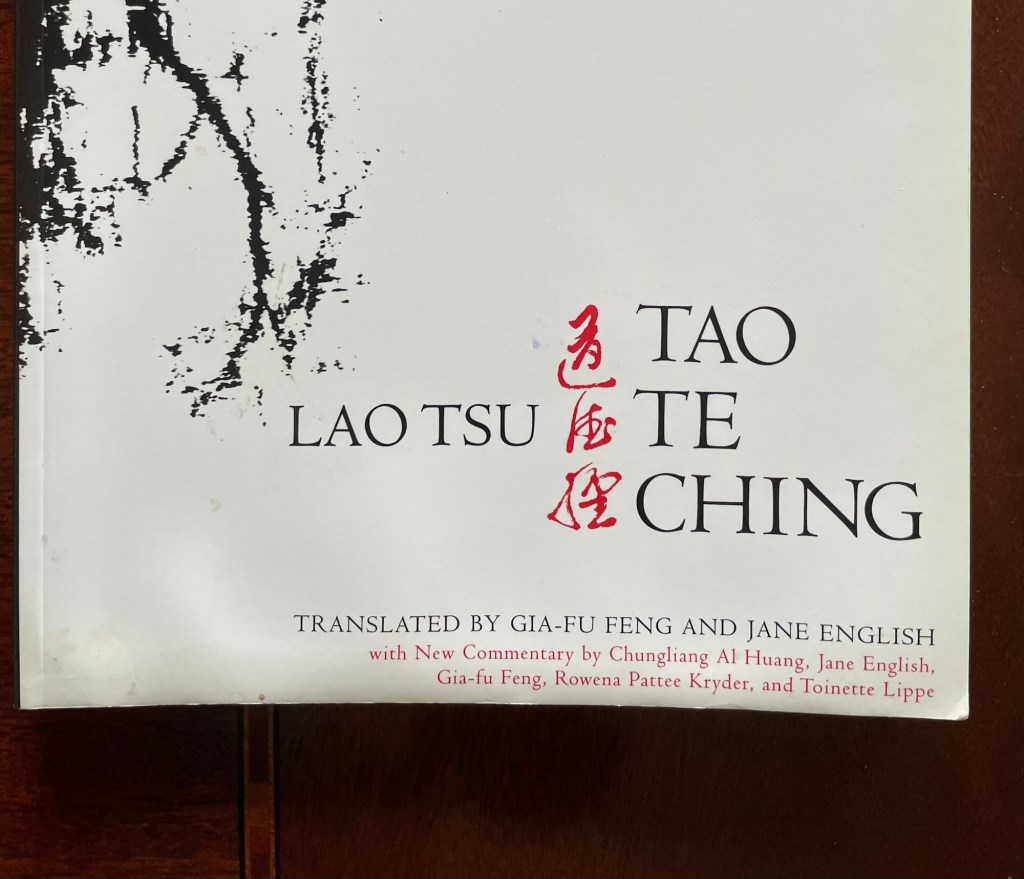
It’s the new normal. Everyday a crisis. In times like these I find comfort in my old friend the Tao Te Ching by the ancient Chinese philosopher Lao Tsu. It’s thought to have been written in the sixth century BC and has been translated into more languages than any other book except the Bible, with good reason.
This is beautiful poetry (even if sometimes a bit obscure to modern ears) and its clear message couldn’t be more timely. The particular translation pictured above, by Gia-Fu Feng and Jane English is my strong favorite, partly because each adage is complemented by tranquil, contemplative photographs that suggest infinity and peace.
In our constantly hectic, over-burdened, over-competitive, thoroughly materialistic society, the quiet message of the Tao can be a welcome antidote. Keep it simple, the Tao says. Get rid of your ego. Just be who you are; just do what you do. Don’t try to be important. Stop trying to impress others. Don’t compete–with anyone, let alone everyone. Remember that you are a part of something bigger, the universe which has always existed and always will.
‘The ten thousand things rise and fall; the Tao is eternal.’
‘Sometimes things are ahead and sometimes they are behind; sometimes breathing is hard, sometimes it comes easily…
‘Therefore, the sage avoids extremes, excesses, and complacency.
‘…There is no greater sin than desire/ No greater curse than discontent/ No greater misfortune than wanting something for oneself. Therefore, he who knows he has enough will always have enough.’
Isn’t it interesting that already in the sixth century BC, wise teachers could see that we are slaves to our fears and desires and by controlling those fears and desires we achieve freedom? In our own (very unwise) society we are taught exactly the opposite. From the time we are born we are conditioned, even brainwashed to get out there and compete; be a winner; buy more stuff; be better, richer, smarter, more important than everybody else. Instant gratification will make us happy. It’s a great way to sell things, but not a good way to build character or a harmonious society.
And it doesn’t make people happy. It’s not even intended to. It makes people dissatisfied so they will buy more products, and it works very well for that purpose. But the side effect is a large population of stressed out, over-worked, underpaid consumers in a highly contentious and divided society.
We may be in for a bumpy ride while that gets sorted out, since it requires a basic shift from a materialistic philosophy of selfish, egocentric individualism to a more wholistic, communitarian set of ideals. In the meantime, I hope you can take some comfort and gain some perspective from a text that has endured for eight thousand years.


Leave a Reply